








What Makes Ortigia the Perfect Base in Sicily?
When most travelers plan a trip to Sicily, destinations like Taormina, Palermo, and Mount Etna usually take center stage. Ortigia—the historic island heart of Siracusa (Syracuse)—is often treated as a quick stop rather than a place to stay. That’s a mistake. If you’re planning a Sicily itinerary, Ortigia deserves far more than a day trip.
What makes Ortigia especially special is its balance: it’s small enough to explore on foot, but rich enough in history, food, and atmosphere to keep you busy for days.
Connected to Siracusa (Syracuse) by two bridges, this small island packs in everything people love about Sicily into a compact, walkable center. We spent 3 days here—using it as a base for day trips to Noto, Modica, and Ragusa, exploring Ortigia’s markets and waterfront streets, and visiting the ancient archaeological sites of Syracuse before continuing on to Taormina. By the time we left, it had become one of our favorite underrated destination in Sicily.
Here’s exactly how we spent 3 days in Ortigia and why it deserves a place on your Sicilian itinerary:

3-Days in Ortigia: Full Itinerary
Day 1: Day Trips to Noto, Modica, and Ragusa
One of the biggest advantages of staying in Ortigia is its proximity to some of Sicily’s most beautiful towns. We dedicated our first day to exploring the UNESCO-listed Baroque towns that make this region so famous.

Noto
The first stop was Noto, often called the capital of Sicilian Baroque architecture.
Golden limestone buildings line wide boulevards, creating one of the most elegant historic centers in Italy. Walking down Corso Vittorio Emanuele felt like stepping into an open-air museum, with churches, palaces, and grand staircases around every corner.
Noto is also known for its recent appearance in The White Lotus, which brought renewed attention to Sicily’s towns—but in person, it still feels peaceful and far less polished than you might expect on screen.
It’s compact, beautiful, and incredibly photogenic—especially in the morning when the streets are quieter.

Ragusa Ibla
Our next stop was Ragusa Ibla, and it ended up being one of my most favorite towns.
The historic district is a maze of narrow streets, Baroque buildings, hidden staircases, and panoramic viewpoints. As we wandered downhill through the streets, we passed quiet corners, weathered stone buildings, and occasional signs of Sicily’s €1 home initiatives, where abandoned houses are slowly being restored and brought back to life.
It’s the kind of place where exploration matters more than planning.
If you’re planning day trips from Ortigia, don’t skip Ragusa. It’s absolutely worth the 1 hour, 15 minute drive.

Modica
For our final stop, we drove to Modica, a town famous for its dramatic hillside setting and unique chocolate-making tradition.
Built across steep slopes and valleys, Modica offers stunning views from nearly every angle. We paused in the historic center to take in the atmosphere, with its beautiful churches and small chocolate shops showcasing Modica’s famous tradition, still made using centuries-old techniques.
Modica was one of the most distinctive places we visited in Sicily and I wish we could have stayed here at least 1 night.
After a full day of exploring, we returned to Ortigia for dinner by the water and an evening stroll through the old town.
Day 2: Discover Syracuse // The Best Things to Do in Ortigia
The second day in Ortigia was dedicated entirely to exploring itself.
Without the pressure of rushing through the highlights, we were able to experience what makes the island of Ortigia and surrounding Syracuse area so special.
Wander Piazza Duomo
The heart of Ortigia is Piazza Duomo, one of the most beautiful squares in Sicily.
Surrounded by elegant Baroque buildings, cafés, and restaurants, it’s the perfect place to sit with an espresso and soak up the atmosphere.


Visit the Cathedral of Syracuse
One of the most fascinating sites in Ortigia, the Cathedral of Syracuse was built on top of a 5th-century BC Greek temple dedicated to Athena.
The original Doric columns are still visible on the outside of the building and form part of the interior walls, making it one of the best examples in Sicily of a structure where ancient Greek and later Christian architecture merge in a single space.
Inside and out, you can see layers of history that reflect Sicily’s Greek, Roman, Norman, and Baroque influences.
It’s a rare chance to literally stand inside a 2,000-year-old temple while visiting a functioning cathedral.


Explore the Ortigia Market
The local Ortigia Market (Mercato di Ortigia) is one of the most vibrant daily food markets in Sicily, located on the northern edge of the island near Via De Benedictis.
The market opens every morning (except Sunday) from roughly from 7:00 AM to early afternoon, and is best experienced early when the stalls are at their freshest and most lively.
Fresh seafood, local cheeses, produce, spices, and traditional Sicilian specialties fill the stalls each morning. Even if you’re not shopping, it’s worth visiting for the atmosphere alone.
It’s also a great place to grab a quick breakfast or lunch while exploring Ortigia—many visitors stop for a sandwich, cannoli, fresh juice, or espresso before continuing through the old town.
Visit the Fountain of Arethusa
One of Ortigia’s most iconic landmarks, the Fountain of Arethusa sits right on the waterfront and is deeply tied to Greek mythology.
The freshwater spring is said to be connected to the myth of the nymph Arethusa, who was transformed here while escaping the river god Alpheus. It’s one of those spots where history, legend, and landscape all overlap.
Today, it’s one of the most atmospheric areas in Ortigia, with wide sea views, relaxed waterfront paths, and some of the island’s best sunset walks just steps away along Lungomare Alfeo.

Walk to Castello Maniace
At the southern tip of Ortigia, Castello Maniace is a medieval fortress overlooking the sea. Built in the 13th century under Emperor Frederick II, it once played a key defensive role protecting Syracuse’s harbor.
Today, it’s a peaceful place to explore, with wide stone courtyards, sea views, and a quiet atmosphere compared to the busier parts of Ortigia. Even if you don’t go inside, the walk out to the castle is worth it for the coastal scenery alone.

Stroll Along Lungomare Alfeo for Sunsets
In the evening, we joined locals and visitors walking along Lungomare Alfeo, Ortigia’s waterfront promenade.
Our visit wasn’t especially sunny—some evenings were cloudy and even a little rainy—but the waterfront still had a striking atmosphere. The soft light over the sea, reflections along the harbor, and quiet energy of the promenade made it a memorable place to end the day in Ortigia.

Wander the Side Streets
One of our favorite experiences in Ortigia wasn’t a landmark at all.
The narrow streets, hidden courtyards, flower-filled balconies, and small local shops make getting lost wandering one of the best things to do on the island, even on a rainy day.


Enjoy Dinner in Ortigia
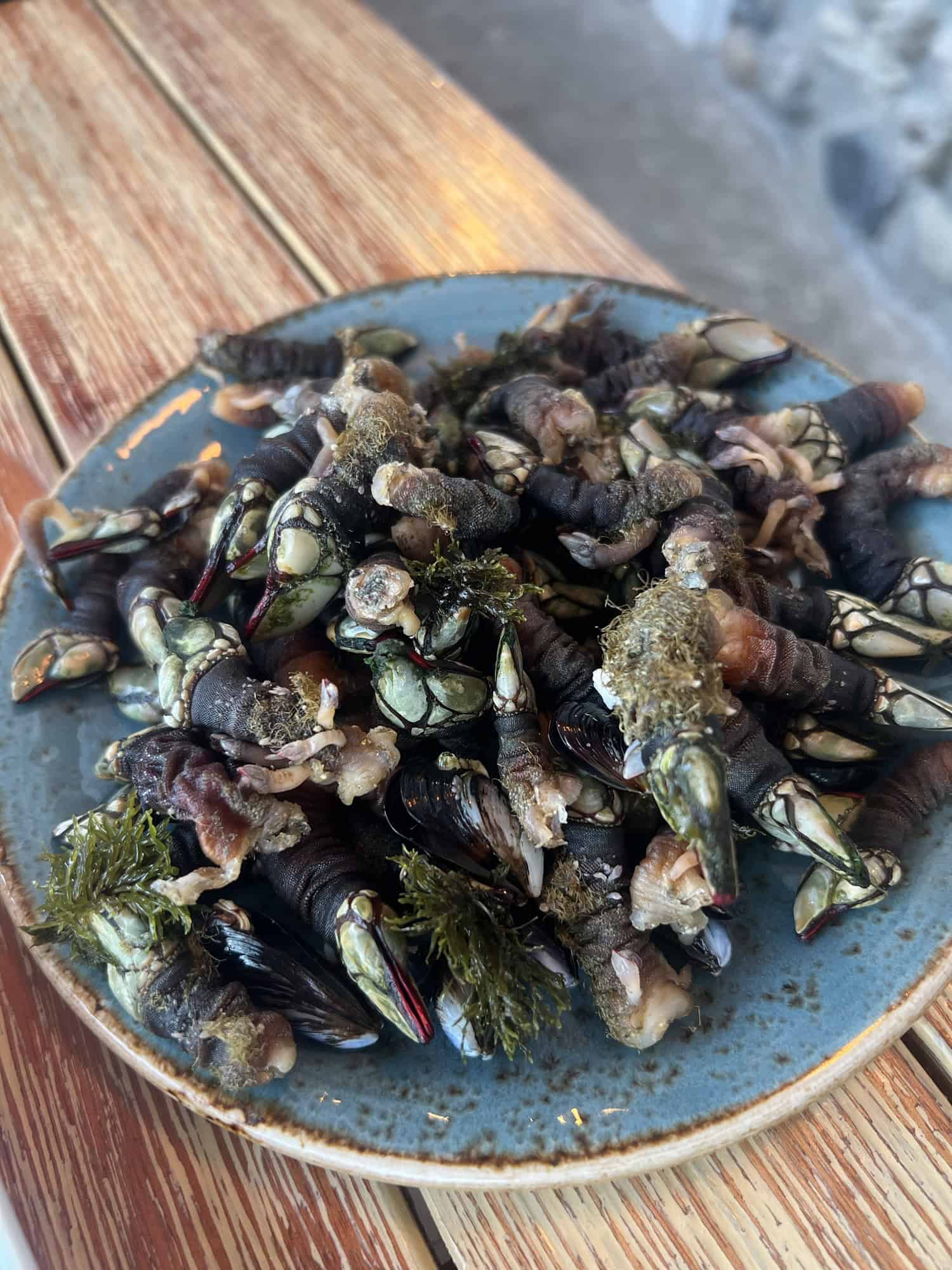
From fresh seafood and pasta to Sicilian wine and cannoli, Ortigia quickly became one of our favorite food destinations on the island.
One of our standout meals in Ortigia was at MOON (Move Ortigia Out of Normality), a modern vegan restaurant and cultural space located in the heart of the historic center.
MOON describes itself as more than just a restaurant—it’s a creative hub combining plant-based Sicilian-inspired cuisine with art, music, and a relaxed evening atmosphere. The menu focuses on seasonal ingredients and inventive takes on traditional dishes, making it a unique dining experience even in a city known for its food scene.
It quickly became one of our favorite dinner spots in Ortigia, both for the atmosphere and the creativity of the dishes.


Day 3: Exploring Ancient Syracuse
Before leaving Ortigia, we spent our final morning discovering the ancient side of Syracuse, and couldn’t believe we were able to walk through structures this old.
Archaeological Park of Neapolis (Syracuse)
The Archaeological Park of Neapolis is one of the most important historical sites in Sicily and an absolute must-visit if you love ancient history.
Highlights include:
- The Greek Theatre, one of the largest in the ancient world
- The Ear of Dionysius, a famous limestone cave with incredible acoustics
- The Roman Amphitheater
- The Latomie stone quarries

What Is It Like to Visit a 2,500-Year-Old Archaeological Park?
Walking through the Archaeological Park of Neapolis gives a powerful sense of Syracuse’s importance as one of the great cities of the ancient Greek world.
Standing inside the massive Greek Theatre or beneath the limestone cliffs of the quarries, it’s wild to imagine just how powerful and influential this city once was across the Mediterranean.
One of the highlights is the Ear of Dionysius—we highly recommend going inside and experimenting with the incredible acoustics, where even a whistle carries surprisingly far through the limestone cave.


Cost & Practical Info @ Archaeological Park of Neapolis
Park entry typically costs around €10–€16 per person, depending on the season and whether temporary exhibitions are included. Tickets can usually be bought on-site or online in advance, and visiting takes about 1.5–2 hours at a relaxed pace.
If you’re staying in Ortigia, the park is only a short (10-15 minute) drive or taxi ride away and fits easily into a half-day itinerary.
It’s one of those places that adds important context to everything you see in Syracuse—and is absolutely worth making time for before continuing your Sicily road trip.

Where to Stay in Syracuse? 📍
If you’re deciding where to stay in Syracuse, we highly recommend staying directly in Ortigia. The island is walkable, atmospheric, and puts you right in the heart of everything—from the market and Piazza Duomo to the waterfront promenades.
Our favorite area to stay is near the Fountain of Arethusa and the waterfront promenade.
I mean… check out the views from our bedroom window!!


We stayed in this apartment during our trip and found the location perfect for exploring on foot:
👉 DIMORA ARETUSA LUXURY AIRBNB – ORTIGIA
Staying here also makes a big difference in the early mornings and evenings, when the streets are quieter and the island feels especially magical.
It was within easy walking distance of the market, the waterfront, and most of the main sights, which meant we rarely needed transport once we arrived.
Other great areas to consider include:
- Near Piazza Duomo – The most iconic and central part of Ortigia. Perfect if you want to be steps from cafés, restaurants, and major landmarks, but it can feel busiest during the day.
- Waterfront / Lungomare Alfeo area – Ideal for sea views and sunset walks. This area feels more relaxed in the evenings and is one of the most atmospheric places to stay on the island.
- Near Via Cavour / the market area – Great for experiencing local life, especially in the mornings when the Ortigia Market is in full swing, with plenty of cafés and food spots nearby.
- Near the bridges (entrance to Ortigia) – A practical choice if you’re renting a car, since it offers easier access in and out of the historic center while still being walkable to everything.
No matter where you stay, choosing accommodation in Ortigia itself makes the experience far more memorable than staying on the mainland in Syracuse.
Closest Airport to Ortigia?
The nearest airport to Ortigia is Catania Fontanarossa Airport (CTA), located about 45 minutes to 1 hour away by car, depending on traffic. This makes Ortigia one of the most convenient bases in eastern Sicily, especially for travelers arriving or departing from the island.
For context, Ortigia is also well connected to Sicily’s other major destinations:
- Around 2.5–3 hours from Palermo
- About 1.5–2 hours from Taormina, depending on traffic and route
Its central position on the east coast makes it an ideal starting point for a Sicily road trip or a final stop before flying home. You can easily explore southeastern Sicily—Syracuse, Ortigia, Noto, Modica, and Ragusa—without long travel times, while still being within reach of the island’s more famous northern highlights.
Because of this, many travelers choose Ortigia as either their first base after landing in Catania or their last stop before departing Sicily.

Is Ortigia Worth Visiting?
Without question, yes.
Ortigia combines history, culture, architecture, food, and coastal beauty in a way that few destinations can. It offers all the charm travelers seek in Sicily while remaining more relaxed than some of the island’s better-known hotspots.
Looking back on our trip, Ortigia wasn’t simply a stop between destinations—it became one of the destinations we remember most.
If you’re planning a Sicily itinerary, don’t just pass through. Give Ortigia the time it deserves.
You might find, as we did, that it’s the region of Sicily you end up loving most.
Until next time, @thetravelingcoats


Read the Comments +