








Gibraltar Itinerary Uncovered:
When planning our Andalusia road trip through southern Spain, we knew we wanted to add a few extra days somewhere completely different. Gibraltar had always intrigued us—a tiny British territory on Spain’s southern coast, where Europe and Africa nearly meet at the entrance to the Strait of Gibraltar.
Beyond the famous Rock, we discovered a destination filled with fascinating history, incredible viewpoints, natural wonders, and unforgettable experiences. Gibraltar’s blend of British traditions, coastal scenery, and centuries of history made it one of the most surprising stops on our Andalusia itinerary—and a place that deserves more than a quick visit.
Journey Into Gibraltar Begins at the Border
The Wildest Runway You’ll Ever Walk or Drive Across
One of the first things that makes Gibraltar different is simply getting there.
Although surrounded by Spain, Gibraltar is not part of Spain. We crossed from La Línea de la Concepción, Spain, through the border checkpoint and into British territory. For most visitors, walking across the border is the easiest option since parking inside Gibraltar can be challenging and limited.
After crossing the border from Spain, both vehicles and pedestrians continue across the active runway at Gibraltar International Airport, making it one of the few places in the world where people and traffic regularly cross an airport runway…

Standing just a short distance from the runway as a plane approaches is one of those travel moments that feels surreal. It’s equal parts thrilling and unforgettable. If your timing lines up with a landing or takeoff, consider yourself lucky, as it’s one of the territory’s most memorable experiences before you’ve even begun exploring.
Entering Gibraltar
When an aircraft is about to land or take off, barriers lower and everyone waits at the crossing, much like a railway crossing. Once the plane has passed and the runway is declared clear, the gates reopen and pedestrians and vehicles continue on their way.
Almost immediately in Gibraltar, the scenery and atmosphere changed. Spanish streets give way to British signs, red telephone boxes, English pubs, and the unmistakable presence of the Rock towering above the town.


Gibraltar’s History:
Quick Review of the Rock’s Remarkable Past
Before exploring Gibraltar’s famous sights, it helps to understand why this tiny territory has been so important throughout history.
Sitting at the entrance to the Mediterranean and the gateway between Europe and Africa, the Rock of Gibraltar has long been a prized strategic location.
The name Gibraltar comes from the Arabic Jabal Tariq (“Mountain of Tariq”), named after the Moorish commander Tariq ibn Ziyad, who landed here in 711 during the Muslim conquest of the Iberian Peninsula. After centuries of Muslim rule, Gibraltar became part of Spain … before being captured by Britain in 1704 during the War of the Spanish Succession. The territory was formally ceded to Britain in the Treaty of Utrecht in 1713.
Because of its strategic position controlling access between the Atlantic Ocean and the Mediterranean Sea, Gibraltar became a major military stronghold. During World War II, the Rock of Gibraltar played a key role for the Allies, and an extensive network of tunnels was built inside the mountain to support military operations.
Today, Gibraltar’s history is still visible everywhere—from ancient fortifications and military tunnels to the viewpoints where you can appreciate why this small piece of land has mattered for centuries.
Exploring the Upper Rock: One Ticket = Many Experiences
The easiest ways to explore Gibraltar’s top attractions is with a ticket for the Gibraltar Nature Reserve, which includes access to highlights on the Upper Rock such as St. Michael’s Cave, the Great Siege Tunnels, the Skywalk, the Apes’ Den, and other viewpoints and historic sites. The ticket is valid for the full day, allowing you to explore at your own pace.
Transportation to the top is separate. You can take the cable car, hire a private taxi/driver, or join a shared tour. Instead of taking the cable car, we hired a local driver near the border who took us up the Rock in a shared van with several other passengers. Along the way, he shared a few stories about Gibraltar’s history and pointed out details we likely would have missed on our own.
If you prefer to explore on foot, it is also possible to hike up the Rock of Gibraltar. The climb is steep in places, but it can be a rewarding way to experience the landscape and enjoy the views along the way. Keep in mind that exploring the Upper Rock involves additional walking between attractions, so plan for several hours and bring water, especially during warmer months.
The current cost is £30 per adult and £22 for children ages 5–11 (children under 5 are free).
If you have limited time, plan your route carefully and allow several hours. While the distances may look short, the steep paths, viewpoints, and photo stops make this a place worth slowing down for.


Things to See & Do in Gibraltar:
1. Watch planes take off with views from above the runway
While watching planes take off from beside the runway is an experience in itself, seeing them from above offers a completely different perspective. From Gibraltar’s Upper Rock, we watched planes take off beneath us, with the aircraft remaining below our viewpoint as they climbed out over the Bay of Gibraltar.
It was one of those unexpected moments that made Gibraltar stand out from other places we had visited. Standing high above the runway, watching planes take off below us with the Mediterranean stretching into the distance, captured the unusual mix of airport, mountain, and sea that makes the Rock so fascinating.

2. Say Hello to Gibraltar’s Monkey Family
Gibraltar is home to Europe’s only wild monkey population—the famous Barbary macaques. The monkeys live freely throughout the Upper Rock Nature Reserve, with one of the best places to see them being the Apes’ Den, where they often gather near the viewing areas.
Gibraltar’s Most Famous Residents
The monkeys have been part of Gibraltar’s story for centuries, and local legend even claims that Gibraltar will remain British as long as the macaques remain on the Rock. While the legend is fun — the real reason they are protected today is because they are iconic and an important part of Gibraltar’s natural heritage.
Although they may look friendly, remember that they are wild animals. They are curious and clever, so remember to keep food, backpacks, sunglasses, and other loose belongings secure (!!)
Do not feed them—besides being harmful to the animals, it can encourage unwanted behavior.
Watching the Barbary macaques up close while surrounded by the dramatic cliffs of the Rock and views across the Strait of Gibraltar is another one of the moments that makes a visit to Gibraltar so memorable.

3. St. Michael’s Cave
One of Gibraltar’s most fascinating natural attractions is hidden deep within the Rock itself.
Named after St. Michael the Archangel, St. Michael’s Cave is a spectacular limestone cave shaped by nature over thousands of years. Walking inside, it is hard to believe you are standing within the Rock of Gibraltar, surrounded by towering stalactites, stalagmites in a dramatic underground cave chamber.
Today, the cave features walkways and atmospheric lighting that showcase its impressive formations, while its incredible acoustics have turned it into a one-of-a-kind venue for concerts and performances. Walking through a cave that has been shaped over millions of years, it’s easy to appreciate why St. Michael’s Cave has remained one of Gibraltar’s most iconic sights.
And yes, we fell for the tourist photos. 😂

4. The Great Siege Tunnels
Exploring Gibraltar’s tunnels gives you a completely different perspective of the Rock—not just as a natural landmark, but as a military fortress.
The Great Siege Tunnels were carved by hand during the Great Siege of Gibraltar (1779–1783), when Spanish and French forces attempted to capture the territory from Britain. The tunnels allowed British defenders to position artillery inside the Rock and create a strategic advantage during the siege.
Walking through these passages, with their narrow corridors and openings carved into the cliff face, brings Gibraltar’s military history to life. The tunnel system was later expanded during World War II, creating an enormous underground network that supported Allied operations.


5. Europa Point: Where Continents Meet
At the southernmost point of Gibraltar, Europa Point offers one of the most unforgettable views in the territory. From here, you can look across the Strait of Gibraltar toward the coast of Africa and truly appreciate Gibraltar’s unique position between two continents.
For centuries, this narrow passage of water has held historical and mythical significance… Ancient Greeks believed Gibraltar was one of the Pillars of Hercules, marking the edge of the known world and the entrance to the unknown beyond.
Standing at Europa Point today, it is easy to understand why this small piece of land has played such an important role throughout history.
A QUICK TIP ABOUT THE “PILLARS OF HERCULES” STOP
If you take a guided tour or tourist bus around Gibraltar, you may see a stop advertised as the Pillars of Hercules on the Rock. It is worth knowing that this is not the same location as the traditional viewpoint associated with Europa Point. The stop on the Rock features a small monument referencing the legend, while Europa Point is the place where you can truly appreciate the geography behind the story—with ocean views across the Strait of Gibraltar toward Africa.
Both are interesting stops, but they offer very different experiences. If your goal is to stand at the edge of Europe and look across the water toward another continent, Europa Point is the place to visit.


How much time do you really need in Gibraltar?
Many visitors experience Gibraltar as a quick day trip from southern Spain, and it IS possible to see the major highlights in a single day. A full day allows enough time to explore the Upper Rock, see the monkeys, visit St. Michael’s Cave and the Great Siege Tunnels, enjoy lunch, and walk through town.
We chose to stay two nights and three days in Gibraltar, and we were glad we did.
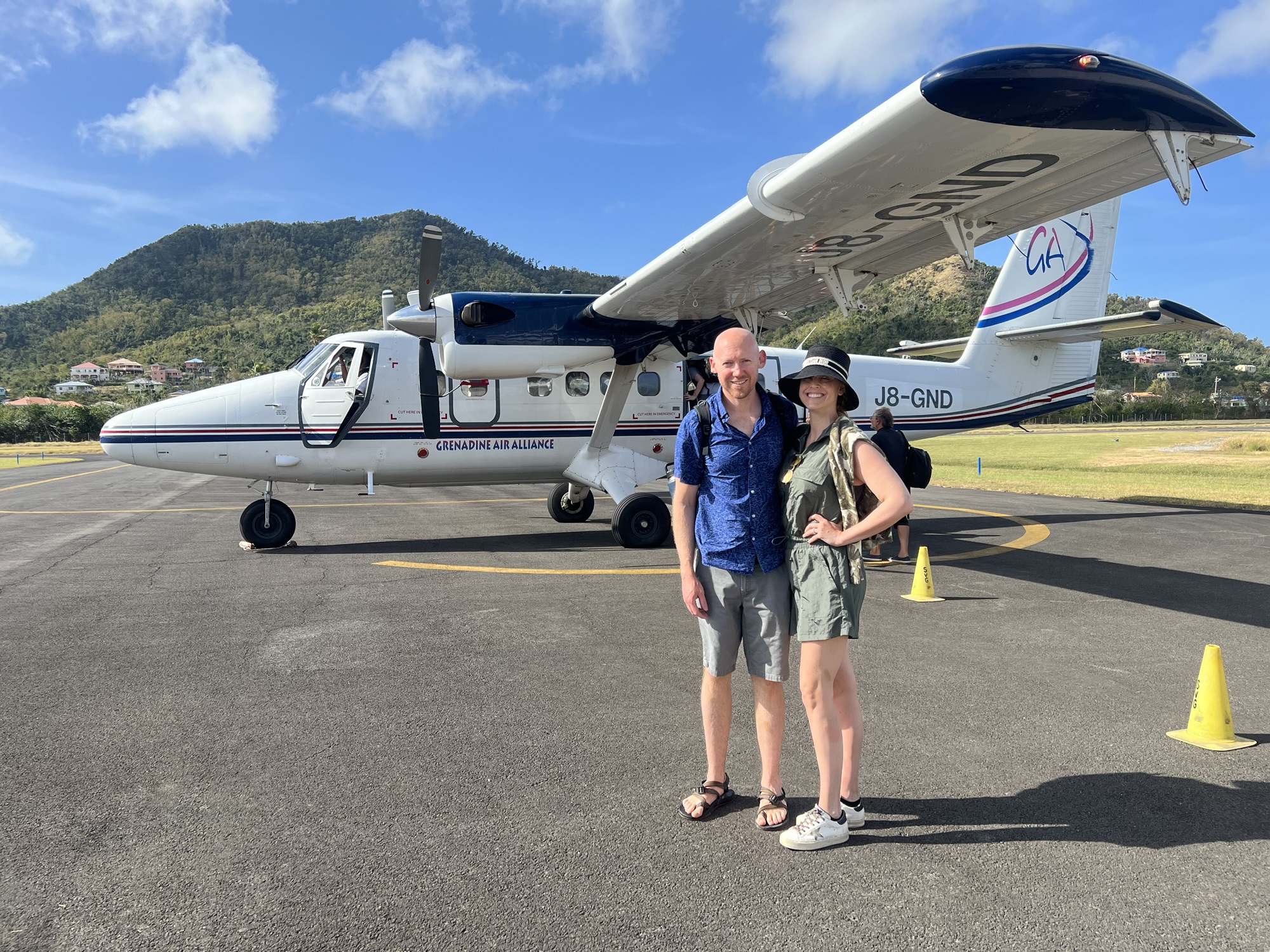
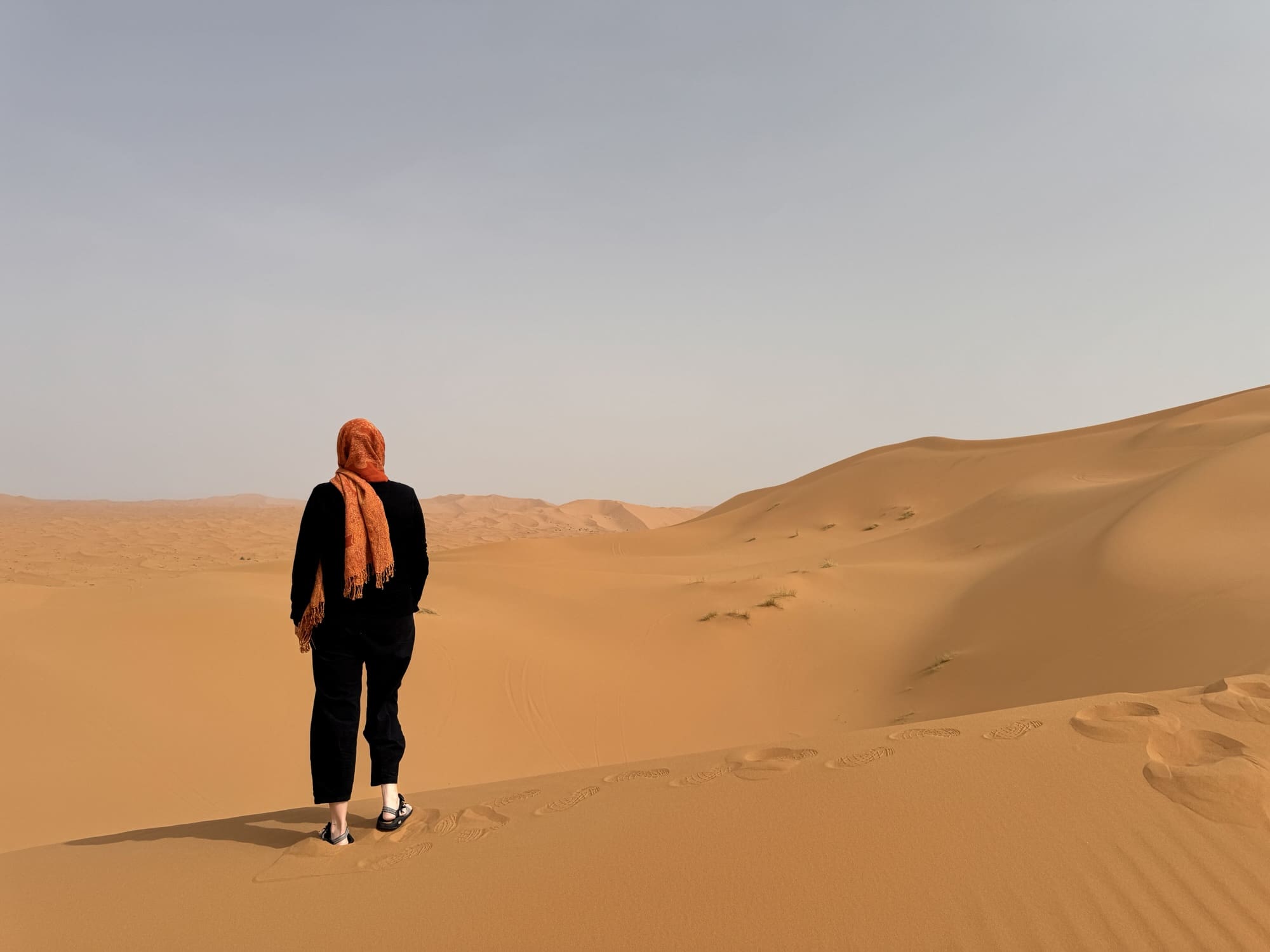
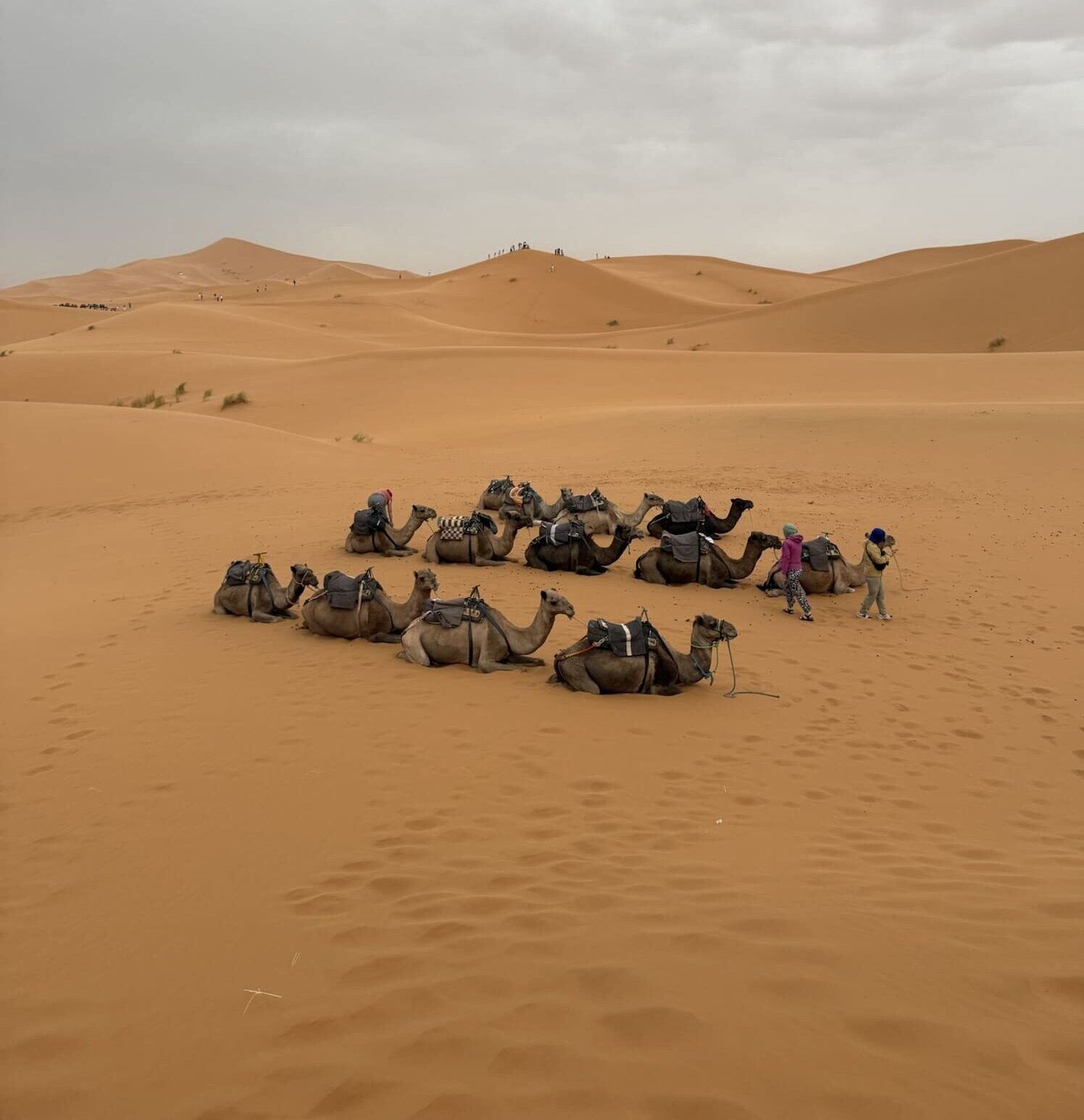
The extra time allowed us to explore at a more relaxed pace and discover that Gibraltar is much more than its famous Rock. Our longer stay also gave us the opportunity to experience more of the area, including a quick day trip across the Strait of Gibraltar to Morocco—adding another country and culture to our Andalusia adventure.
We highly recommend spending a few days in Gibraltar rather than rushing through as a quick stop. We could have easily spent more time relaxing on the beaches of Catalan Bay, exploring the coastline, and enjoying the views across the Strait of Gibraltar.
Where We Stayed in Gibraltar:
Catalan Bay
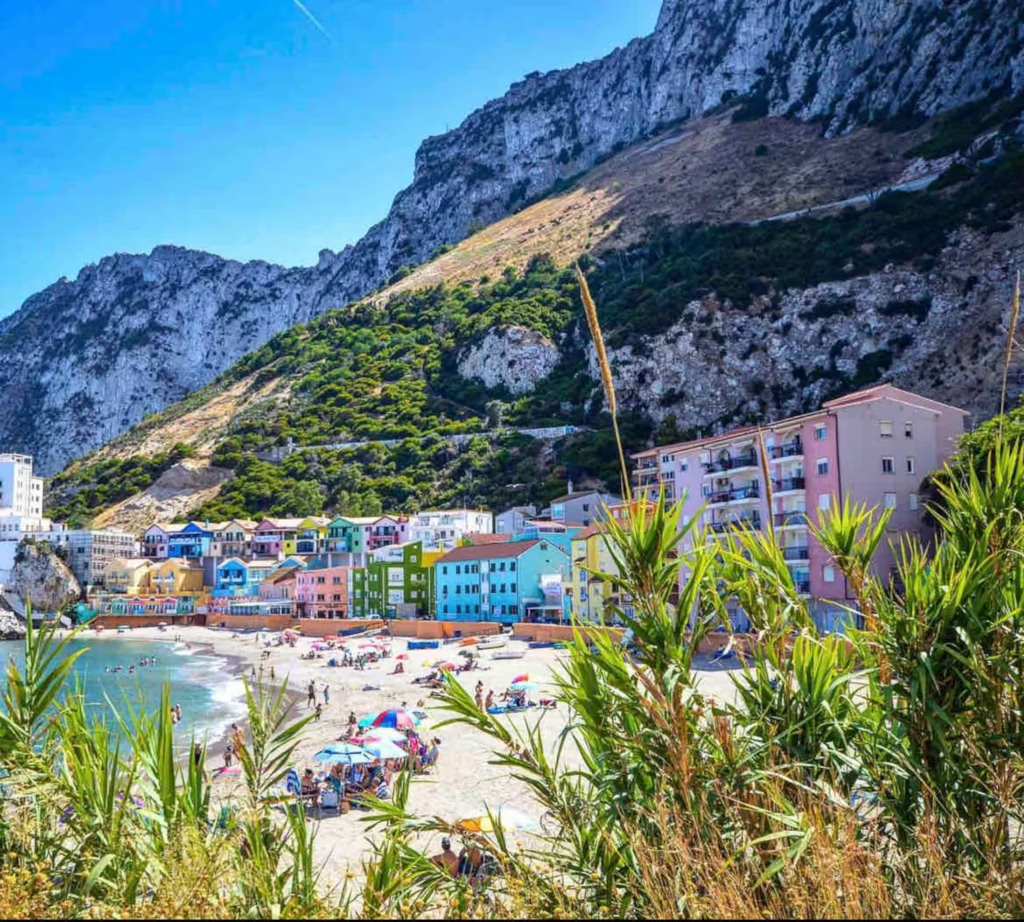
For our stay in Gibraltar, we chose to base ourselves in Catalan Bay, a charming fishing village located on the eastern side of the Rock of Gibraltar. Away from the busier town center, Catalan Bay gave us a quieter and more authentic experience while still keeping us close to everything we wanted to explore.
Our beachfront accommodation offered epic views and the chance to enjoy beautiful sunrises over the Mediterranean each morning. The village itself has a relaxed, local feel, with colorful waterfront homes, a small beach, and a wonderful family-favorite seafood restaurant just a minute’s walk away. It was the perfect place to end the day after exploring Gibraltar.


Catalon Bay, Gibraltar: Luxury Beachfront Home 👈 Airbnb link
Practical Tips for Visiting Gibraltar:
Driving Into Gibraltar
We arrived with our own rental car, which gave us the flexibility to explore Gibraltar and the surrounding area at our own pace. Driving across the border is possible, but it is important to know that Gibraltar is compact and parking can be challenging—especially in the busy town center.
For visitors coming only for the day, many travelers choose to park in La Línea de la Concepción, Spain, and walk across the border. This often saves time and avoids the challenge of finding parking inside Gibraltar.
Because we stayed in Catalan Bay, we had a different parking situation. The closest parking area was about a 10-minute walk from our accommodation, but the beautiful beachfront location and peaceful setting made the short walk worthwhile.
Border Crossing Tips
- Bring your passport—you are crossing an international border between Spain and Gibraltar
- Allow extra time at the border during weekends, holidays, and peak travel periods.
- Walking across the border is often the simplest option for day visitors.
- If driving, check your rental car agreement to confirm that taking the vehicle into Gibraltar is permitted.
Getting Around Gibraltar
Gibraltar is small enough to explore on foot, but be prepared for hills, stairs, and uneven paths—especially when visiting the Upper Rock. Comfortable walking shoes are essential.
Public buses are a convenient option, with routes connecting areas like Catalan Bay, the town center, and major attractions. Taxis are also available, particularly useful if you want to reach viewpoints or attractions without walking uphill.
Visiting the Rock and Monkeys
- Keep bags, food, and loose belongings secure around the Barbary macaques. They are entertaining but very curious!
- Wear comfortable shoes—the Upper Rock involves walking on steep and uneven terrain.
- Start early if you want to avoid crowds at popular attractions like the cable car, St. Michael’s Cave, and viewpoints.
Trip Recommendations
If your schedule allows, spend at least one night in Gibraltar rather than treating it only as a day trip. Staying longer gives you time to enjoy the quieter coastal areas, explore beyond the main sights, and experience the unique atmosphere after the day visitors leave.

Final Thoughts on Visiting Gibraltar
Gibraltar was a fascinating addition to our Andalusia road trip and offered an experience unlike anywhere else we visited in southern Spain. Despite its small size, this British Territory packs a surprising amount into just a few square miles.
From watching planes take off below us from the Upper Rock, to exploring historic tunnels, meeting the famous Barbary macaques, and looking across the Strait of Gibraltar toward Africa, we quickly realized Gibraltar was more than just a quick border crossing.
Spending a few nights allowed us to experience the Rock beyond its main sights and appreciate the mix of British influences, Mediterranean scenery, and centuries of history that make Gibraltar such a distinctive place.
Until next time, @thetravelingcoats



Read the Comments +